Summary
- The 2028 UEFA European Championship will take place across nine stadiums in England, Scotland, Wales, and Ireland.
- Each co-host will aim to finally win the championship, with Wales and England having strong previous performances.
- All hosting stadiums have historical significance; one is yet to be completed, and Belfast’s Casement Park was withdrawn.
The 2028 UEFA European Championship will take place across nine football stadiums in England, Scotland, Wales and Ireland. Six of the venues are located in England, while the other three countries offer one stadium each.
The last – and the only time – England staged a European Championship was back in 1996, while each of the co-hosts will be hosting the competition for the first time – Euro 2020 excluded. It’s the perfect opportunity for each of them to try and finally win the competition, while the Three Lions have four podium finishes to their name (two finals, two semi-finals) and Wales won bronze in 2016 on their second participation.
At the time of writing, only one stadium has not yet been completely built, while all the others have been completed many years – even decades – ago. This guide will take you through the unique history of each stadium, along with details of the construction process and cost.
Belfast’s Casement Park was originally earmarked as the tenth host stadium for the tournament. But, as the time and cost involved in renovating the stadium were deemed too significant, its status was eventually withdrawn. However, the stadium was not replaced.
|
Full List of EURO 2028 Stadiums |
||
|---|---|---|
|
Stadium Name |
Location |
Capacity |
|
Wembley Stadium |
London, England |
90.000 |
|
Principality Stadium |
Cardiff, Wales |
74.500 |
|
Tottenham Hotspur Stadium |
London, England |
62.850 |
|
Etihad Stadium |
Manchester, England |
53.400 |
|
Everton Stadium |
Liverpool, England |
53.000 |
|
Hampden Park |
Glasgow, Scotland |
52.000 |
|
St. James’ Park |
Newcastle, England |
52.000 |
|
Aviva Stadium |
Dublin, Ireland |
51.700 |
|
Villa Park |
Birmingham, England |
42.640 |
England
Wembley Stadium
- Location: London, England
- Capacity: 90.000
- Opening date: 9th March 2007
- Construction cost: £789m
Few stadiums in the world can boast a richer history than Wembley. Although its modern version was only inaugurated in 2007, its ancestor, which took place on the same site, will celebrate its 105th anniversary in 2028. A legendary arena in which the greatest teams have fought the most epic battles for decades.
From the 1966 World Cup Final to the 1996 and 2020 Euros and the legendary White Horse Final, the London venue has seen its turf trodden by some of the greatest players of all time. And there’s no end in sight, as the stadium is set to host a third European Championship final.
Tottenham Hotspur Stadium
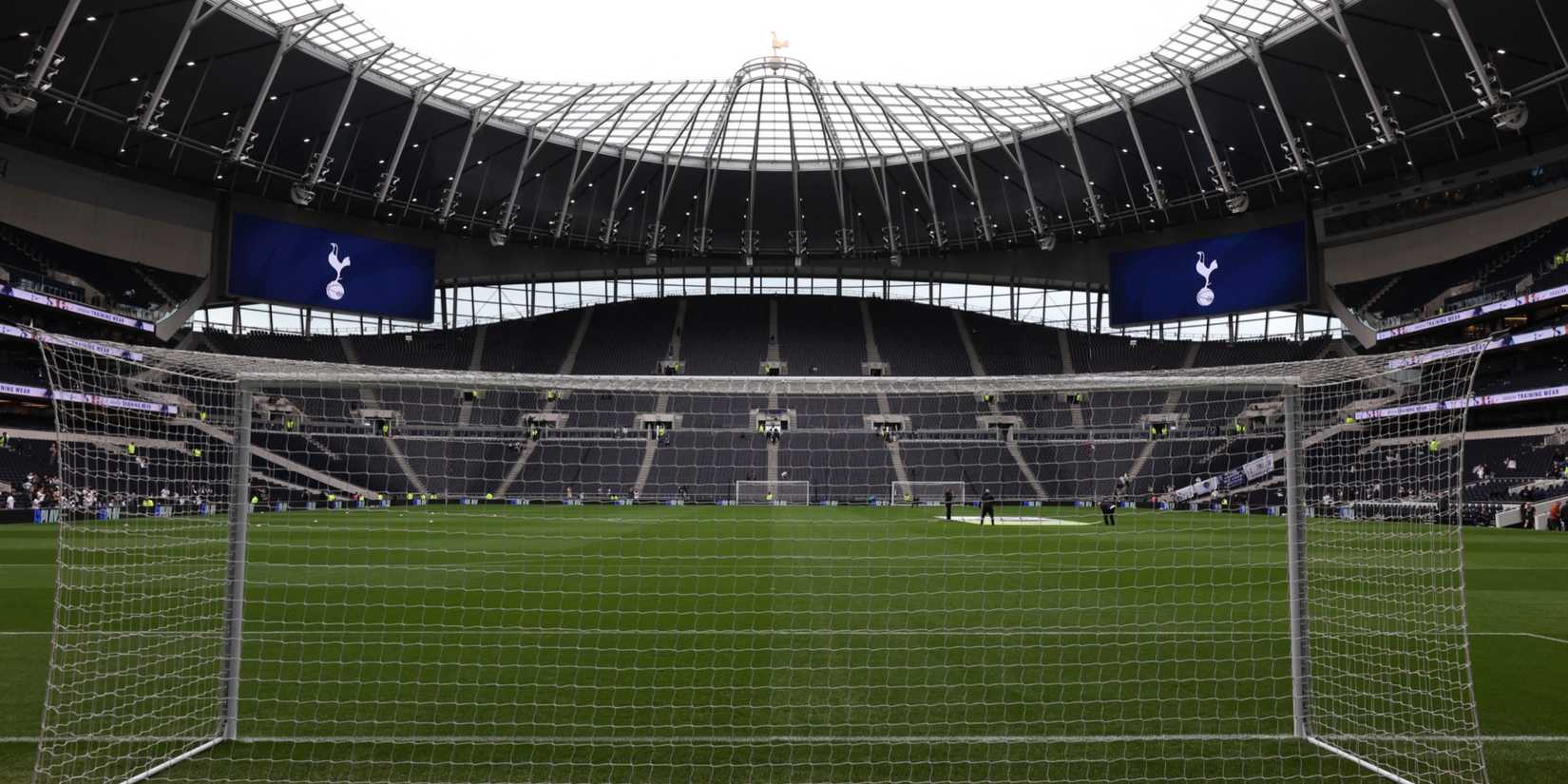
- Location: London, England
- Capacity: 62.850
- Opening date: 3rd April 2019
- Construction cost: £1b
The ultra-modern home of Tottenham Hotspur, whose name it bears, Tottenham Hotspur Stadium will host the first European Championship matches in its history. With a capacity of 62.850, it is currently the second-largest stadium in the Premier League, just behind Old Trafford.
Its South Stand, inspired by the famous yellow wall at Dortmund’s Westfalenstadion, is the largest stand ever built in an English stadium. It can accommodate up to 17.500 fans. While details of the matches to be staged at each stadium are not yet known, it’s safe to assume that a number of final-round matches will be staged there.

Related
10 Most Expensive Stadiums in Football History [Ranked]
From London Stadium to Wembley Stadium, here are the 10 most expensive stadiums in football history.
Etihad Stadium

- Location: Manchester, England
- Capacity: 53.400
- Opening date: 25th July 2002
- Construction cost: £154m
Unlike its neighbor Old Trafford, whose state of renovation could not be guaranteed in time, the Etihad Stadium will indeed host Euro 2028 matches. Home to Manchester City, the Etihad Stadium opened its doors to soccer in 2003 (it was originally built to host the 2002 Commonwealth Games) and underwent its first extension during the 2014/15 season.
By 2026, the stadium will be further extended to accommodate over 61.000 fans, making it the fourth largest club stadium in the Kingdom. Renowned as a real fortress from which the Skyblues benefit, the Etihad Stadium has also brought good luck to the Three Lions, who have never been beaten there in three matches.

Related
Man City’s New North Stand Expansion: Opening Date, Latest Developments and More
Manchester City are currently undergoing renovation works at the Etihad Stadium, which will increase the capacity to nearly 62,000.
Everton Stadium

- Location: Liverpool, England
- Capacity: 53.000
- Opening date: 2025 (Planned)
- Construction cost: £750m
Everton Stadium has the unique distinction of being the only stadium designated to host Euro 2028 matches still under construction. The future home of the Toffees, who will leave Goodison Park at the end of the 2024/25 season after playing there for more than 130 years, the stadium, located on the banks of the River Mersey, will be able to hold around 53.000 fans.
A massive investment of around £750m, the first stone of which was laid in 2021 and the last of which will make the stadium the eighth largest in the UK. Like Tottenham Hotspur Stadium, it will also feature a grandstand inspired by Signal Iduna Park’s Sudtribune, which can accommodate 13.000 people.
St. James’ Park

- Location: Newcastle, England
- Capacity: 52.350
- Opening date: 16th October 1880
- Construction cost: Unknown
The second-oldest stadium in the Premier League – behind Stamford Bridge – St. James’ Park will also be taking part. Home to Newcastle United since 1892, its history with the game goes back to 1880, when it was first played in the “Cathedral on the Hill”.
With a capacity of over 52.000 spectators, it is also known for producing one of the finest atmospheres in English soccer’s elite thanks to its dedicated Toon Army. A regular host of major tournaments, in 2028 it will host its second Euro, following on from 1996, when three group-stage matches were staged there.
Villa Park

- Location: Birmingham, England
- Capacity: 42.640
- Opening date: 1897
- Construction cost: £20m
Located on Trinity Road in the city of Birmingham, Villa Park is a landmark in the English soccer landscape. Opened in 1897, it has since been occupied by Aston Villa and has hosted three 1966 World Cup matches, four Euro 1996 matches and 55 FA Cup semi-finals – more than any other stadium.
With a capacity of just under 43.000, the original plan was for the century-old stadium to be able to accommodate some 50.065 people in its stands by 2028. The redevelopment plans have now been put on hold, and the date of delivery is still unknown. It is therefore highly unlikely that the stadium will be ready for the competition.
Wales
Principality Stadium

- Location: Cardiff, Wales
- Capacity: 74.500
- Opening date: 26th June 1999
- Construction cost: £121m
Also known under the name of Millenium Stadium, the Principality Stadium, located in Cardiff, is the largest Welsh stadium and the fourth largest arena in the United Kingdom. With a capacity of 74.500 in its football configuration, it is regularly used by the national team for international matches.
Opened in 1999, its construction cost £121m, 46 of which came from public funds provided by the Millennium Commission. Classified as a category 4 stadium by UEFA, it was the venue for the 2017 Champions League final between Juventus and Real Madrid, as well as several FA Cup finals between 2001 and 2006.
Scotland
Hampden Park

- Location: Glasgow, Scotland
- Capacity: 52.000
- Opening date: 31st October 1903
- Construction cost: Unknown
Although it has undergone a number of renovations over the years, Hampden Park is the oldest stadium designated to host Euro 2028 matches. Mainly known as the home of the Scottish national team since it opened in 1903, it has also been the venue for numerous sporting events (Champions League finals, Euro 2020, Scottish Cup) over the course of its rich history.
A legendary stadium which, until 1950 and the construction of the Maracana in Rio de Janeiro, was the largest stadium in the world – seating 149.415. And although its capacity has since been reduced by two-thirds, its atmosphere and the noise coming from its stands make it one of the hottest stadiums in the UK.
Ireland
Aviva Stadium

- Location: Dublin, Ireland
- Capacity: 51.700
- Opening date: 14th May 2010
- Construction cost: £340m
Also rated category 4 by UEFA (the first and only in the country), Dublin’s Aviva Stadium will be the Irish representative of the Euro 2028 hosts. Opened in 2010, the 50.000-seater stadium – a capacity deemed too low even before its inauguration – was the venue for the 2024 Europa League final between Atalanta Bergamo and Bayer Leverkusen.
This is a stadium where international matches are commonplace, hosting matches for national football and rugby teams. The Irish capital will be looking to avenge the fact that, in 2021, it had to forego three Euro 2020 matches because of the coronavirus pandemic.
Correct as of 17/04/2025
About Author

You may also like
-
Michael Carrick opens up on Manchester United future
-
What Happens If Arsenal and Man City Finish on the Same Points
-
Kompany targets Osimhen as Kane successor, but Man United and PSG not keen
-
Christian Falk reveals Bayern Munich stance on Michael Olise amid Liverpool interest
-
Guessand Needs Five More G/A for Permanent Move