One of few jobs capable of tempting Jürgen Klopp back into the dugout, the German national team has gradually sprung back to life under the country’s most charismatic coach.
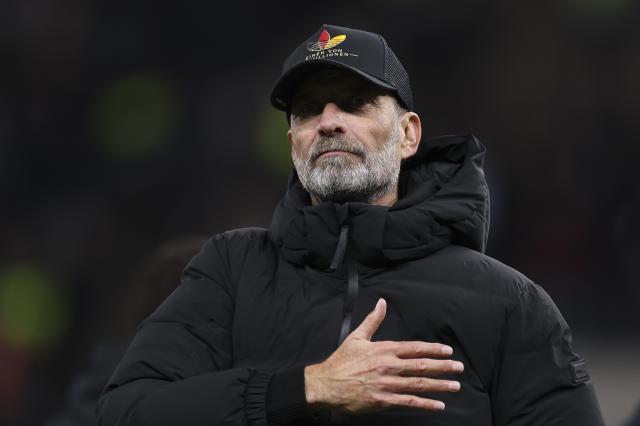
| Photo by Maja Hitij/Getty Images |
After an experimental start involving 44 call-ups, the German national team outlined their progress by ending the UEFA Nations League group stage with a five-goal rout of the Netherlands.
Slow burning to begin with, Klopp’s side has taken shape and now presents itself as a high-pressing unit full of youth.
Lesser-known Bundesliga talent Derry Scherhant has stood out, while RB Leipzig’s Brajan Gruda brings that exact DNA to the fore. Joshua Kimmich remains an integral leader in the middle of the park, while Jonathan Tah and Nico Schlotterbeck bring stature as well as immense composure at the rear.
Here are five observations following the most recent international break:
1. Klopp remains a unifying leader
It has to be said that Klopp is unique in his ability to build camaraderie and a collective identity from a group made up of individual talents.
Strict discipline, as well as forward-looking optimism, has been restored despite an array of early exits at previous major tournaments. You could even argue that the former Borussia Dortmund and Liverpool boss was the only man capable of achieving such a feat.
2. Florian Wirtz has left his mark
Despite his struggles at club level, Wirtz has grown into the Germany shirt.
In building the side’s attacking structure around the former Leverkusen talisman, Klopp has given confidence and belief to a player with undoubted ability.
Dynamism on either side, positional freedom and an encouragement to press have also made a notable difference.
3. Youth is prevailing
One thing of note is the average age reduction. Initial tinkering has led to a 24-man group with structure and a healthy dose of youthful exuberance.
Scherhant and Gruda have quite clearly injected new energy into the starting lineup.
Even the next generation is beginning to emerge, with the rapidly developing Tom Bischof joined by other Bundesliga talents in Finn Jeltsch and Saïd El Mala. Lennart Karl, naturally, needs no introduction.
4. The spine is back
Marc-André ter Stegen is the new, undisputed number one following Manuel Neuer’s international retirement.
Tah and Schlotterbeck, two of the Bundesliga’s most complete defenders, also offer reassurance to any goalkeeper.
Kimmich and Aleksandar Pavlović, an indomitable midfield pairing at club level, bring a positive approach to build-up play while always looking for that all-important forward pass.
5. The toxic cloud has cleared
Klopp’s biggest achievement, arguably, is restoring confidence within the squad and well beyond it.
Banning smartphones in the gym, dining hall and medical areas appears to have created a more unique bond between the players.
An obvious embrace of meritocracy, exemplified by the personnel used in his relatively short time as coach, has created an environment in which the deserving can flourish.
Ending this international break with a resounding victory over a more than capable Dutch side has also generated an immense amount of optimism and positivity.
Six games in and Klopp’s reign has already yielded much fruit. However, it’s important to remember that there’s always more to come with this particular coach.
About Author

You may also like
-
Dino Toppmöller tops Cologne’s shortlist as René Wagner’s future hangs in the balance
-
Uli Hoeneß backs Jürgen Klopp to restore ‘hunger’ to German football
-
Stuttgart star turned down interest from Brighton
-
Bayern Munich’s salary hierarchy: Player wages revealed
-
Bayern Munich president lauds Harry Kane